The Power of Conversation: Four Things You Should Know When Navigating Brain Health
Sign up and receive information on the latest news and updates.
When it comes to brain health, the questions that keep people awake at night can feel overwhelming. Is this memory lapse normal? When should I seek help? How can I support a loved one who may be showing signs of cognitive decline?
These aren’t questions that can always be answered through a fact sheet, article, or presentation. They often require something more powerful: conversation.
That's why creating opportunities for real-time dialogue between experts and the people seeking support is a critical part of our mission at UsAgainstAlzheimer’s.
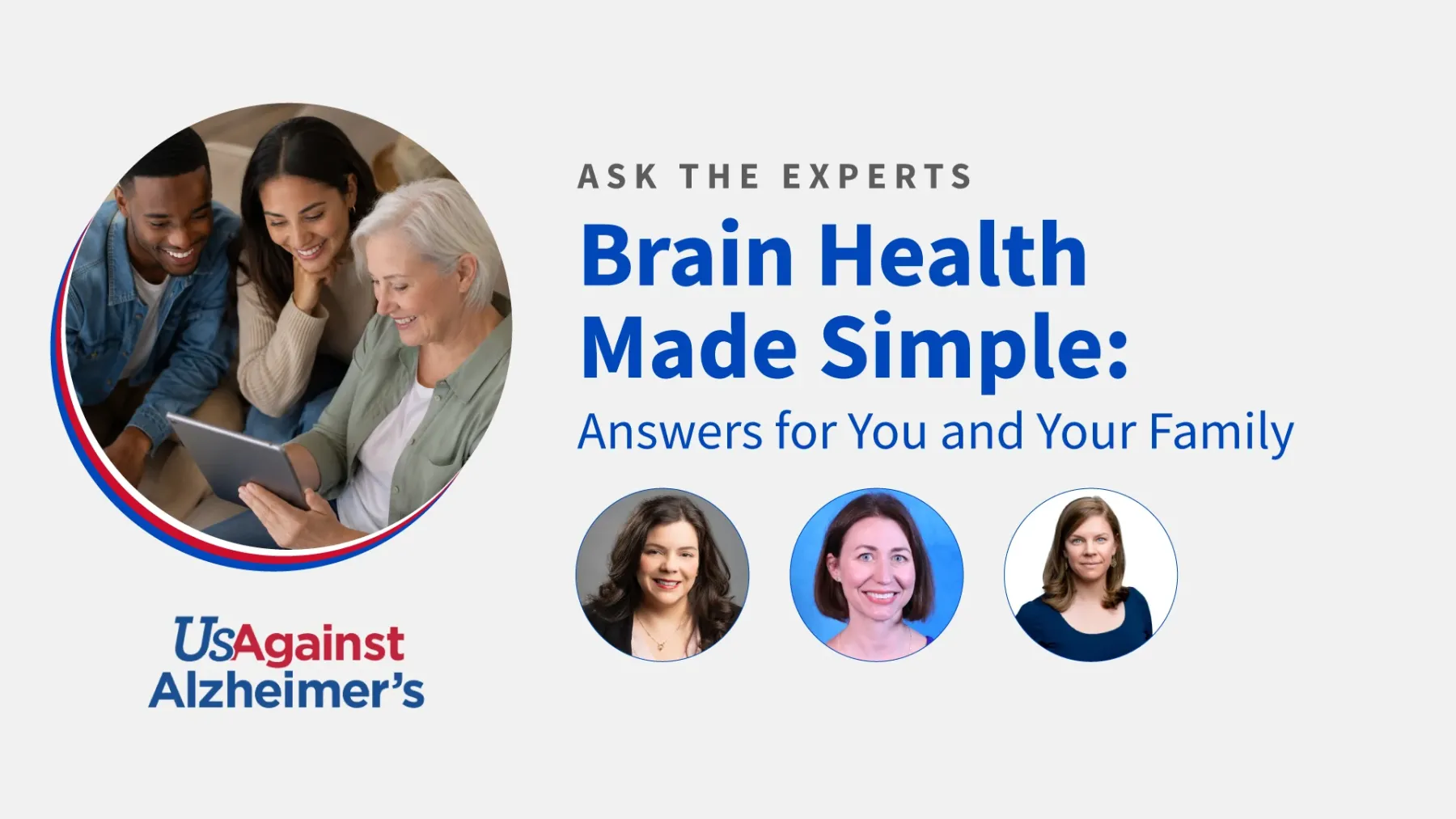
Our recent Brain Health Made Simple LinkedIn Live brought together experts, caregivers, and members of the Alzheimer’s community for an open and meaningful discussion about brain health. The event featured Dr. Maria Mora Pinzon, MD, MS, FACPM, of the Wisconsin Alzheimer's Institute, and Laura Medders, LCSW, of Emory Integrated Memory Care. The conversation was moderated by our very own Catherine Patterson, Acting COO of UsAgainstAlzheimer's, who, like so many families, is navigating the deep complexities of caring for a loved one with Alzheimer's.
While every person’s experience with Alzheimer’s is unique, the discussion highlighted four important lessons you should know about navigating brain health for yourself or a family member:
1. Brain health starts long before diagnosis: One of the most important messages from our experts was that brain health is a lifelong journey. While there is currently no guaranteed way to prevent Alzheimer's disease, growing research shows that lifestyle factors such as physical activity, quality sleep, social connection, and managing chronic health conditions can all play an important role in supporting long-term brain health.
Staying informed about emerging research and understanding the factors that influence brain health can empower individuals to make informed decisions throughout their lives. Visit our website for the latest updates on brain health, prevention, and risk reduction research.
2. Paying attention to memory changes matters: Many people wonder where the line falls between a normal part of aging and something that may warrant further attention. While occasional forgetfulness can be normal, persistent changes in memory, behavior, communication, or the ability to manage daily activities deserve attention and a conversation with a healthcare professional. Early evaluation can help individuals and families better understand what they are experiencing and identify potential next steps.
Additionally, early detection can open the door to resources, care planning, and support that may not be available if concerns go unaddressed. UsAgainstAlzheimer’s BrainGuide can help you get started. Take the questionnaire today to receive resources tailored to your needs.
3. If you’re concerned, keep asking questions: Navigating the healthcare system can be immensely challenging and overwhelming, particularly when concerns about memory or cognitive changes are involved.
Many families feel uncertain about where to begin or frustrated when they don't receive clear answers right away. If that sounds familiar, remember that it’s okay to keep asking questions. Ultimately, seeking a second opinion, asking additional questions, and advocating for yourself or a loved one are all reasonable steps in the process.
No one knows your experience better than you do. Trust your observations, ask questions, and continue seeking the information and resources you need.
4. Caregivers need support too: For many families, concerns about brain health eventually become caregiving responsibilities. Caregiving can be extremely meaningful and rewarding, but it can also be emotionally, physically, and mentally demanding. Having access to credible information, support networks, community resources, and opportunities to connect with others facing similar challenges can make a significant difference. Building support into your daily life isn’t a luxury; it’s an essential part of sustaining your well-being as a caregiver. You can access a variety of caregiver support resources on our website.
The Conversation Continues
Brain health questions don't always have simple answers. But asking those questions and having access to trusted information, expert guidance, and supportive communities is an important first step. At UsAgainstAlzheimer’s, we remain committed to creating opportunities for people to engage directly with experts, ask questions, and find answers that are meaningful to them. We hope to see you at our next event!
Missed the live discussion? The full recording is available on YouTube.