
A network of UsAgainstAlzheimer’s.
Featured Reports
Each year, ResearchersAgainstAlzheimer’s (RA2) releases a report on Alzheimer’s drugs in late-stage clinical development and other related topics. Check out the latest reports.
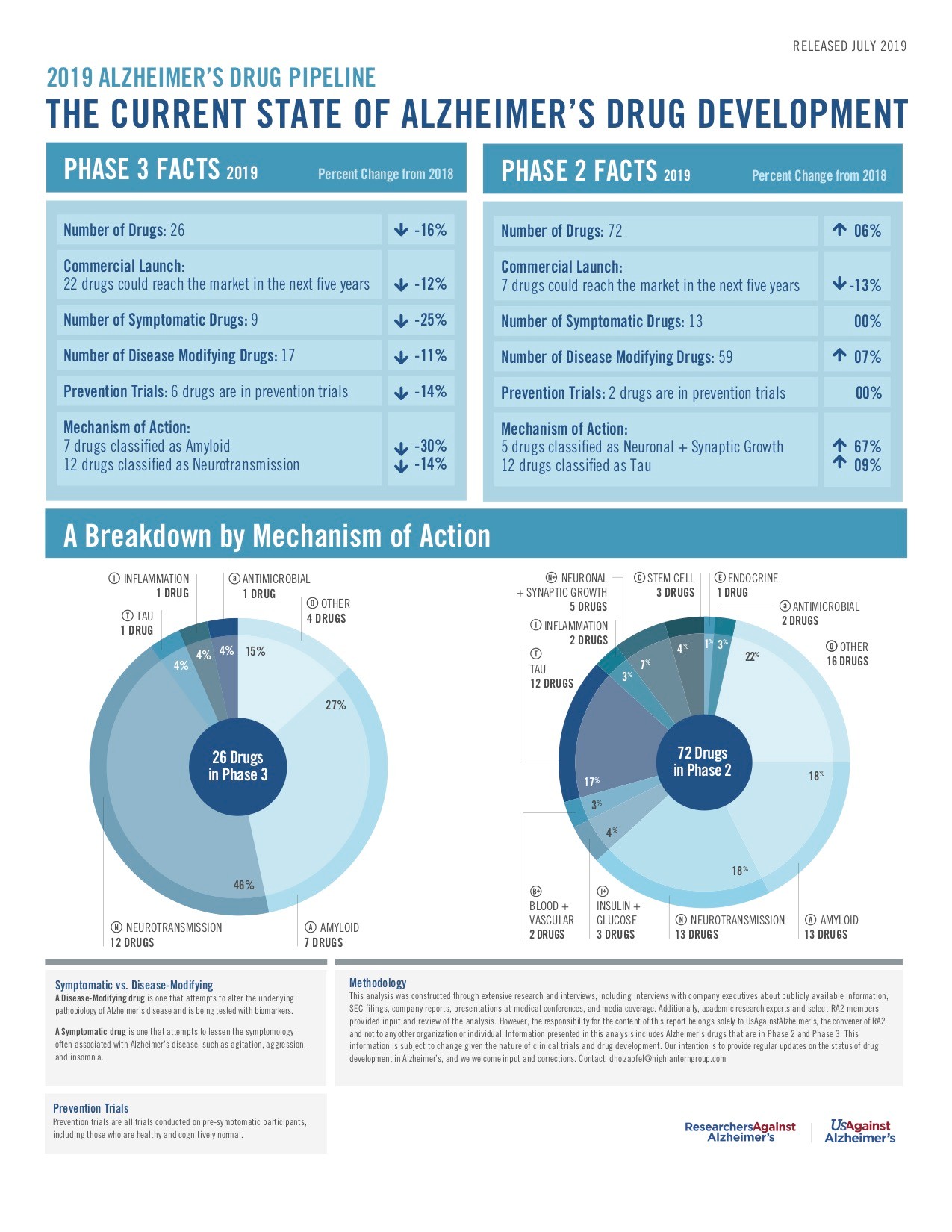 RA2’s Phase 2 & 3 Pipeline Poster (July 2019)
The 2019 Alzheimer's drug pipeline report showcases an array of approaches in development to treat the disease, including novel vaccines, gene therapies and interventions designed to target bacterial and viral infections associated with Alzheimer's.
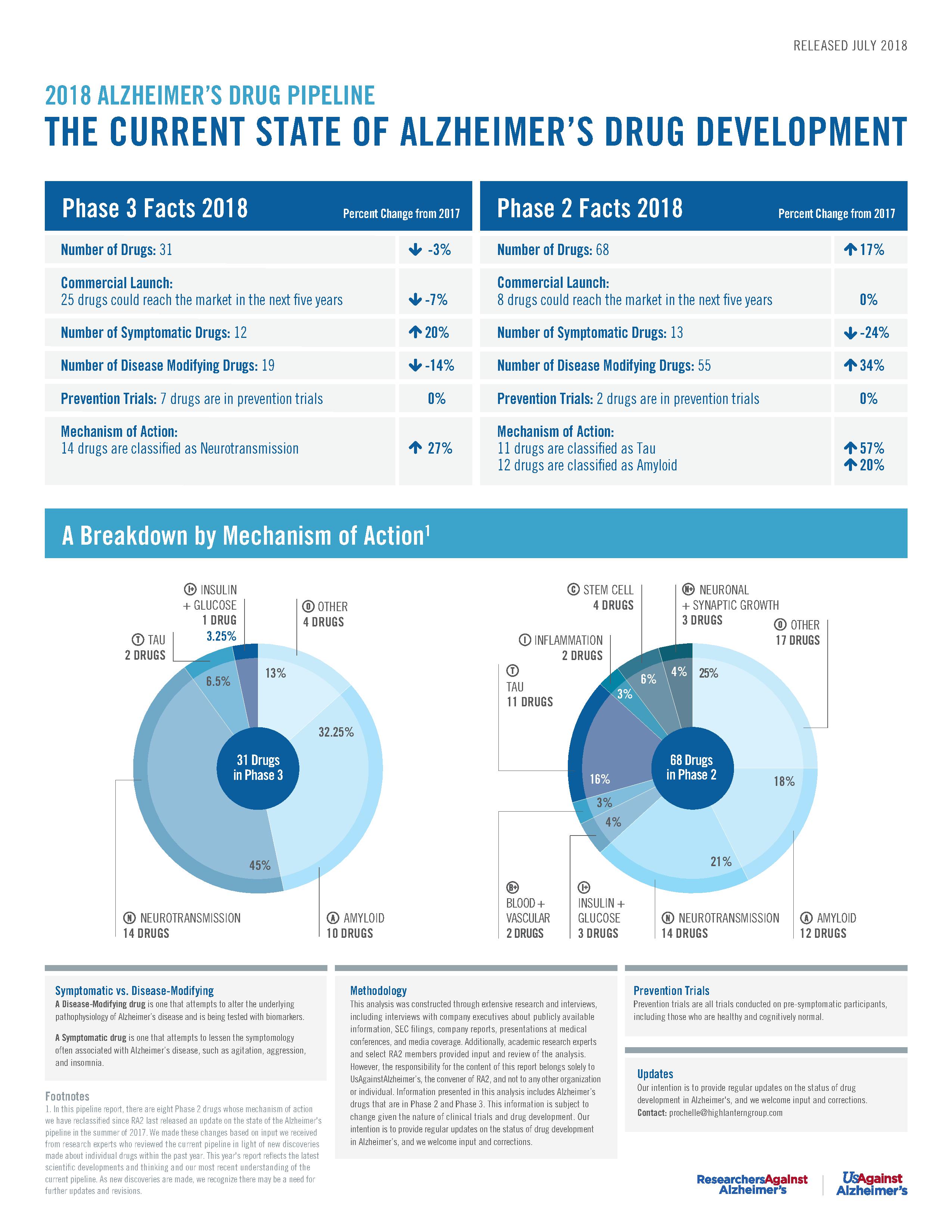 RA2’s Phase 2 & 3 Pipeline Poster (July 2018)
ResearchersAgainstAlzheimer’s calls on governments, industry, entrepreneurs, and world leaders to improve the healthcare system to respond to today's patients and caregivers and accommodate future Alzheimer’s disease treatments in its latest drug pipeline analysis.
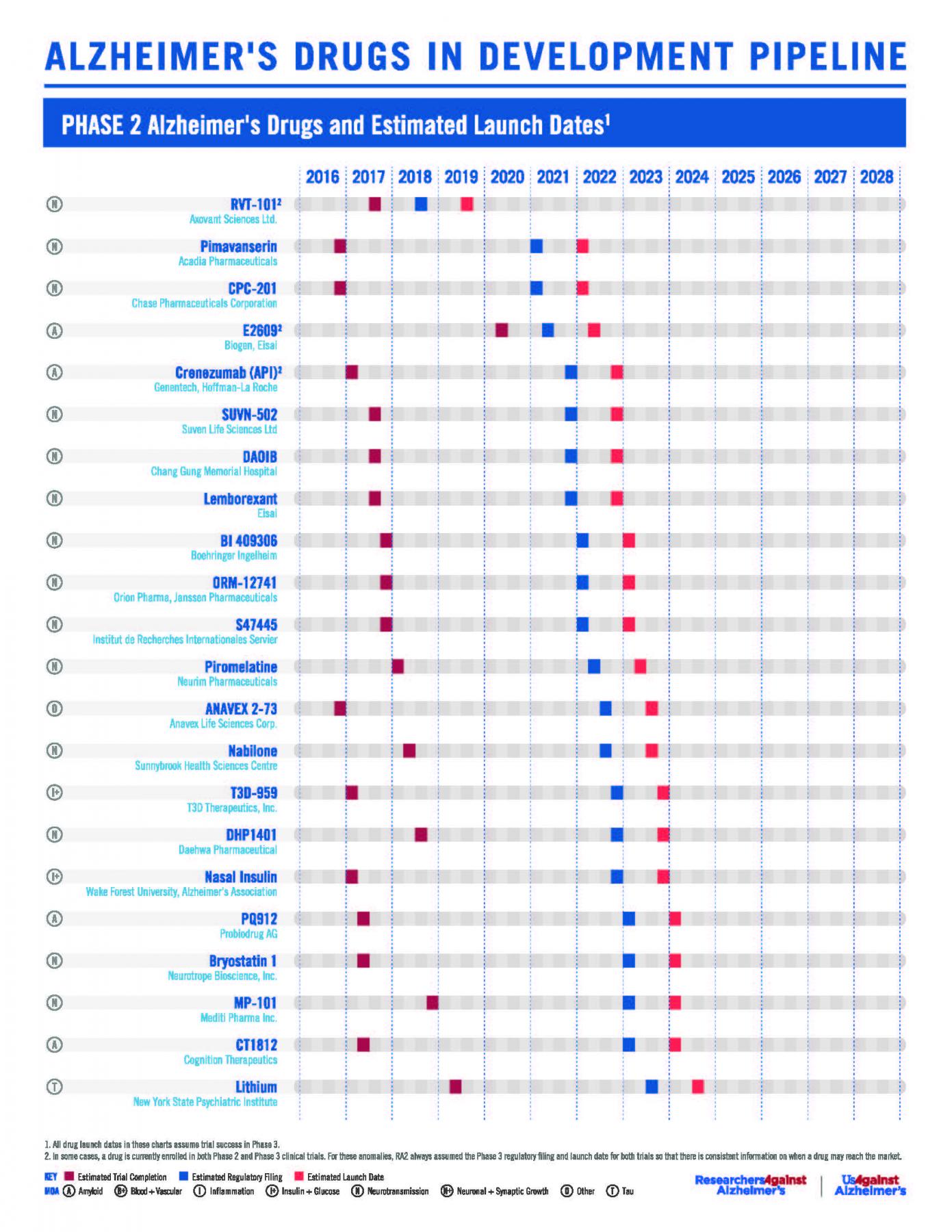 RA2’s Phase 2 & 3 Pipeline Poster (July 2017)
Twenty-seven Alzheimer’s drugs in Phase III clinical trials and eight drugs in Phase II clinical trials may launch in the next five years, according to a revised Alzheimer’s pipeline analysis presented at the Alzheimer’s Association International Conference (AAIC) by ResearchersAgainstAlzheimer’s.
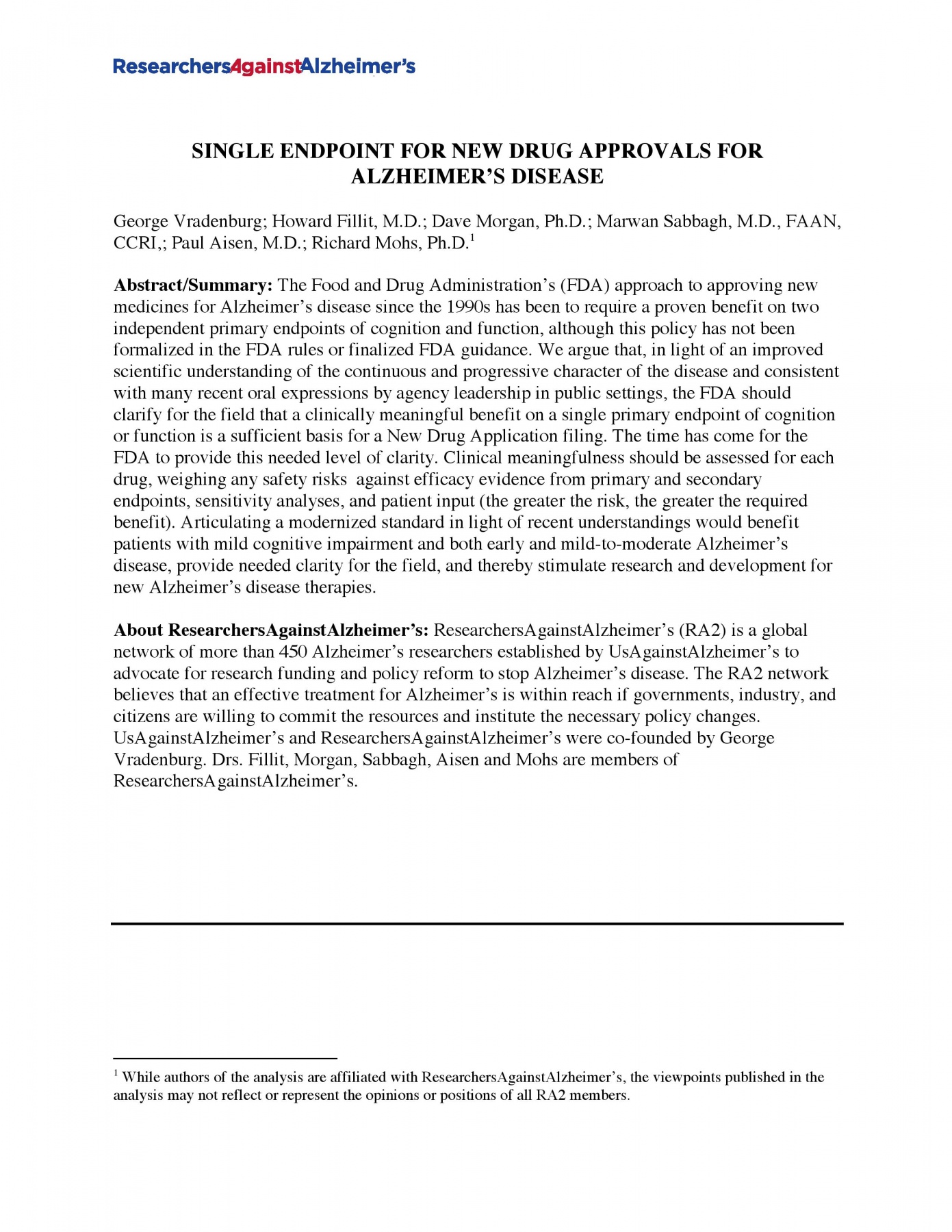 Single Endpoint for New Drug Approvals for Alzheimer’s Disease (May 2017)
The FDA's approach to approving new medicines for Alzheimer’s disease since the 1990s has been to require a proven benefit on two independent primary endpoints of cognition and function, although this policy has not been formalized in the FDA rules or finalized FDA guidance. The FDA should clarify for the field that a clinically meaningful benefit on a single primary endpoint of cognition or function is a sufficient basis for a New Drug Application filing.
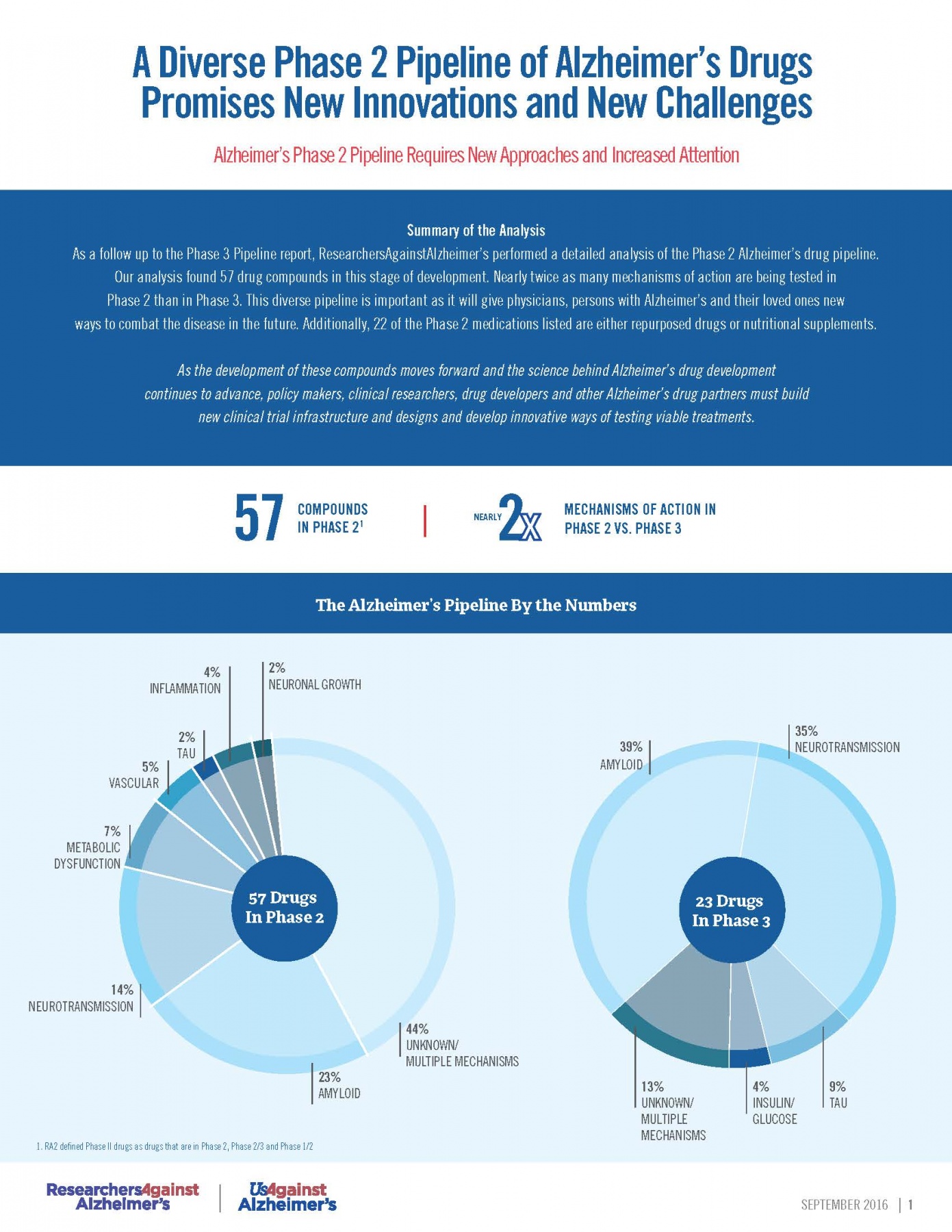 RA2’s Phase 2 Pipeline Analysis (September 2016)
A new analysis of the Phase II Alzheimer’s drug pipeline, conducted by RA2, revealed 57 new Alzheimer’s drugs. According to the analysis, nearly twice as many mechanisms of action are being tested in Phase II as compared to Phase III clinical trials.
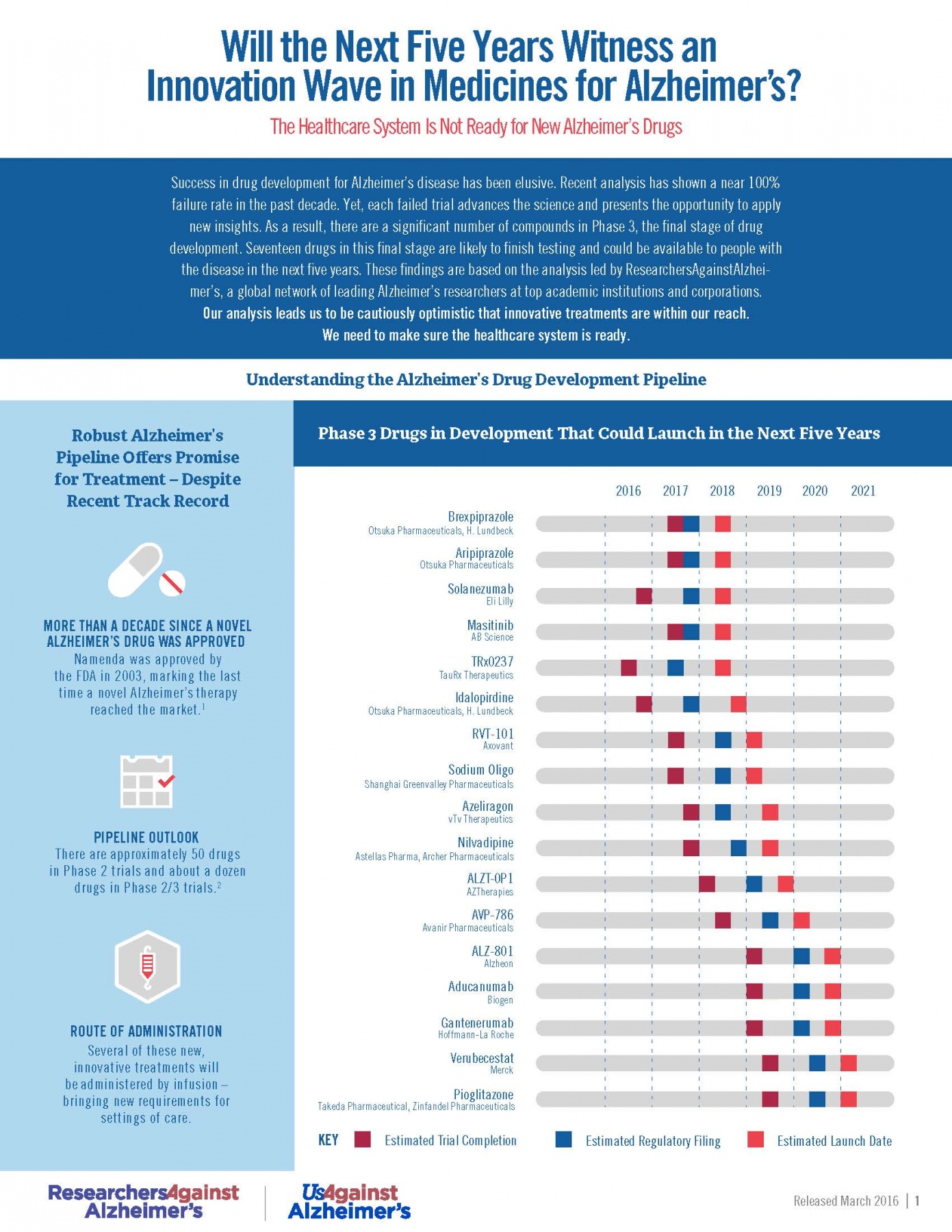 RA2’s Phase 3 Pipeline Analysis (March 2016)
Today’s Alzheimer’s disease drug pipeline, marred by more than a decade of high failure rates and public underinvestment, is offering near-term promise with 17 drugs on pace to launch in the next five years, according to a recent analysis conducted by ResearchersAgainstAlzheimer’s.